Fabulous write-up from Dean after he moderated a panel on mobile monetization at the GDC this year. The room was packed even though it was up against other, much sexier sessions.
As Dean correctly notes, that’s a solid indicator that the toughest problem in mobile gaming is discovery and monetizing F2P games. Here are a couple of money-quotes:
It’s all about sustaining an audience that has a natural tendency to peter out after a few weeks. One chief executive at our Mobile Summit joked that the best strategy a game company can pursue, if it has a hit game, is to shut down and not try to do another one. That’s because the hardest thing is to keep a string of hits going.
The good thing is that the winners in mobile monetization can produce billion-dollar games. The bad news is that it feels like a lottery. For the rest of the companies in mobile, there is hope if they can just hang in there.
We talk about this all the time — it’s a lottery. We used to call it “hit-driven” but that term seems archaic now. Welcome to the new Lotteconomy.
This looks promising. Great devs behind it. And DeNA. And Unity. I hope this game gets serious traction along the road to higher mobile quality games. They’ve been touting their control scheme as a major feature and, although it’s not exactly brand new or 100% unique (we were experimenting with one-finger-rotate and touch-move FPS controls back in ’09 — players were not quite ready for it then), it’s the right approach at the right time with the right team.
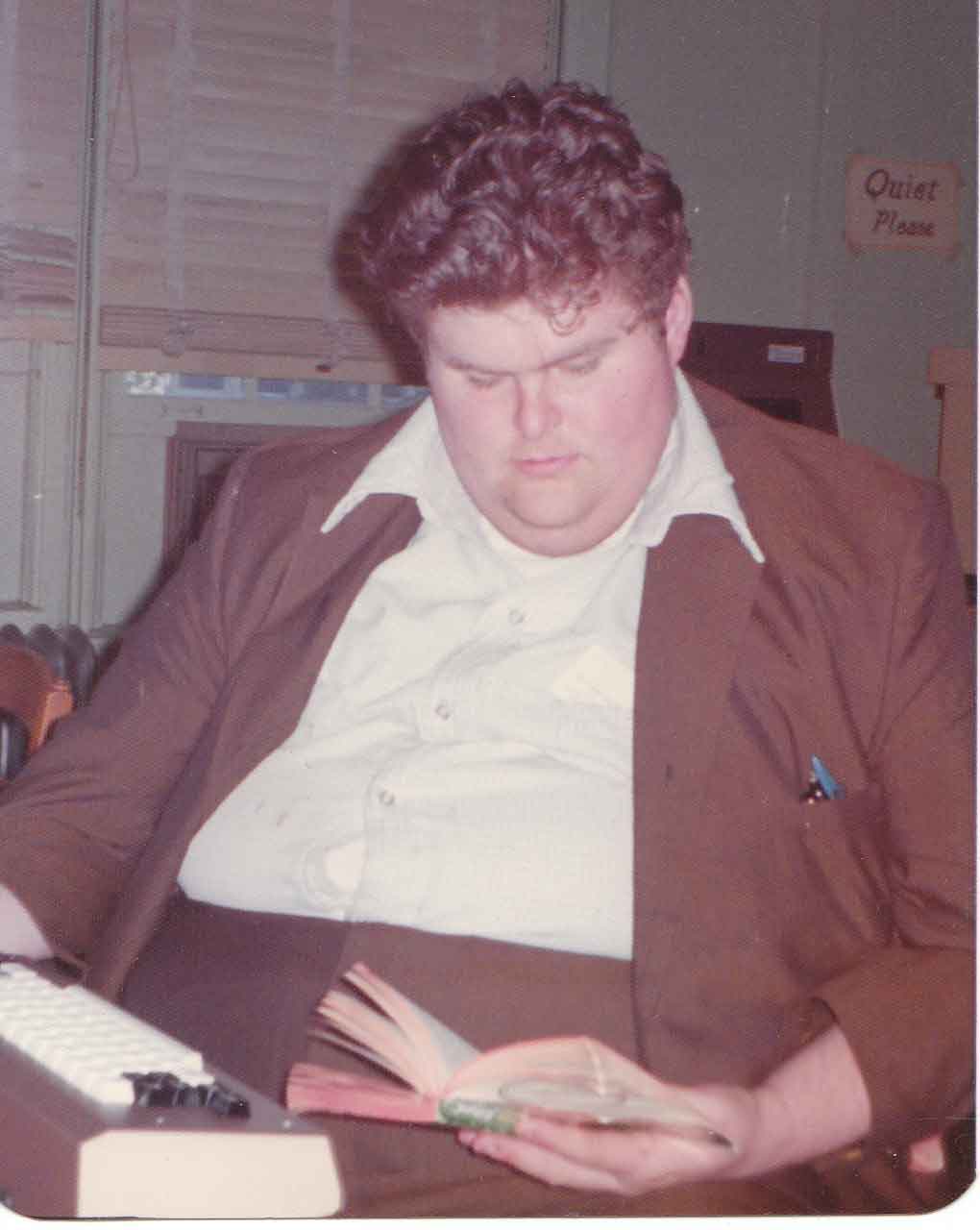
I couldn’t get Silas Warner out of my head yesterday (The Digital Antiquarian — a fabulous blog — has an absolutely wonderful write-up on him, do go read it if you’re at all interested in the history of video games).
I worked with Silas back in the early ‘oughts, at Analog Devices, long after his legendary work at Muse Software. I use the word “work” loosely, since we were on different teams (Silas was focused on bringing our audio product, SoundMax, to Playstation, while my job was SoundMax tools for PC and online). I didn’t interact with Silas more than a handful of times, but I can confirm that he was indeed one-of-a-kind, with an exceedingly bright mind.
While I’m 6’4″ myself, Silas was an imposing physical presence at almost seven feet tall. He was only a few years older than I am today, but suffered from kidney disease, diabetes and arthritis. He didn’t get around very well, and when he spoke, it was clear that his body was making it very tough on him. He seemed to be in constant pain.
I was smitten by his reputation and brilliance but repelled by his presence and suffering. I wish I’d been a real friend to him, as if through friendship I could have somehow brightened his day or eased his suffering in some tiny way. He died just a few years later in 2004, a man who achieved great things despite life-long illness and difficult odds. I missed a chance to learn from him and an opportunity to practice compassion and empathy, perhaps making something better of my own character in the process.
Silas, here’s to you – may you glitter as stardust, wherever you are.
People only ever really riff on failure if they later became successful — failure isn’t very interesting unless it leads down the same path as success. Success stories are inspiring, especially if you’re failing (or have recently failed) at something. To wit, they are motivational, hopeful, empathetic.
They are also oversimplified quantizations of reality that tend to resolve to somewhat predictable buckets of low and high points. They are more story than anything else, and story is a most addictive form of crack-cocaine-for-the-soul for us human-types — it’s pretty much wired right into us.
Ultimately I find the most interesting (and most difficult) thing about failure and success is how they are redefined when they’re happening. Success is a standard and failure is a function of success that, well, failed. But the standard is often redefined, by re-writing the function to, well, not fail. The real heart of the success/failure thing is not the story as it unfolded but as it unfolds. It’s a matter of granularity. Be in the moment, and the dichotomous, binary Hollywood film script you use to analyze your life fades away, unimportant. Be in the moment, and you steer your ship up top, on deck, instead of down below with a compass and a map. Be in the moment, and you get better at trusting yourself. Be in the moment, and do.
This just in from GamesBeat. I hate when a write-up probably missed its own point. Quote:
[Kiloo chief creative officer Simon] Moller believes that this works because it pools knowledge and skills. Sybo worked as animators on a previous Kiloo project, so everyone knew they had development skills. Kiloo, on the other hand, understood the free-to-play model and how to implement it in the game.
Puh-lease. My guess is that co-development was key because the financial risk was spread out. That makes way more sense than pooling knowledge and skills — if it were just about the talent, one company would have probably contracted the other as WFH.
I’m disappointed by Marissa Mayer’s decision, as reported by AllThingsD’s Kara Swisher, to ban all remote work at Yahoo. While there could be real justification for this move, the way it broke — through a memo from Yahoo’s head of HR, Jackie Reses — is a smoking gun for a case of company process replacing trust. Form suggests function.
Presumption: Yahoo identified a problem with the productivity of remote workers. This may be a big presumption, since it’s possible that no problem was identified and the move was good old unwarranted assumption. This happens all the time and has as much to do with individual philosophy as it does legitimate qualitative experience. I don’t really have a hard time imagining that meeting:
CEO: “We have how many people working remotely, again?” HR: “Hundreds or more.”
CEO: “Well that doesn’t make any sense, we have to all pull together to make Yahoo the best Yahoo ever! We can’t have a bunch of hoos off running around with all us yas back here at the office! We didn’t do that at Google!”
HR: “Then the question is, do we accept lower productivity by allowing remote work, or do we increase productivity by banning it?”
But let’s give Mayer credit where credit is due and presume there was legit data behind the decision. There would have been data presented to her by her lieutenants showing that remote workers in various departments were less productive than their in-house counterparts. The data would have been mapped to ROI in some form and backed up by the research camp that suggests that working from home is less productive (as opposed to the camp that touts remote work — there is plenty in both camps). The whole thing would have been properly spreadsheeted and powerpointed.
At that point Mayer could have either asked HR to make the bill into law (presumably what she did) or ask her managers to target the specific employees whose productivity was down and bring them into the office to see if they improve. Making law was the easy way out — it was a common case of adding a process instead of identifying areas that needed trust. The other way — to fix specific problems with productivity and trust within the organization — would have involved more time, effort, follow-through and data mapping.
And given the bridge over troubled interwebs on which Yahoo is teetering, it’s a not a stretch to see that going the quicker, easier corporate-initiative route might make some sense. There are too many Yafish to fry as it is and Yahoos need to buck up and they still have a hundred more Yagenda items to get through and all that. But I can’t quite go there — too often companies make broad, easy strokes when detailed sketches are needed to draw forth real change, make direct impact and build and maintain trust. Productivity has a hard time springing forth from large-scale process alone, and Yahoo’s decision in this case sure seems like a little red flag. They have enough of those already.
I was in South Carolina recently with a client and we got into a discussion about our first jobs and what we learned. I grew up on a farm in Western Kentucky so I had plenty of jobs from an early age. But I consider my first real gig to be a small sign-painting business in high school. It started when I got a shot at designing and painting the facade for the first video arcade in town, “Time Out”. The project required me to work with highly-opinionated people, manage others and make a tight deadline no matter what.
Once I’d done the main design work (the logo in the photo) and was ready to begin the paint job itself, I discovered almost immediately that I was in over my head — I had less than a week to complete the work (you can’t see it in the picture but there was about a 40 ft. wide x 15 ft. tall wall that had to be hand-painted with over a dozen colors according to my meticulously drafted proposal) and be ready for the weekend grand opening. I quickly acquired a co-founder — my friend Rick who I’d known since first grade — who was happy to join up. Rick was trustworthy, artistic and smart. We finished the job ahead of schedule.
The experience was a perfect fit with my growing passion for video games. I ended up spending a good portion of the paycheck in the arcade itself, one quarter at a time — and I’ve always wondered if the owner knew he’d get most of his money back. But it wasn’t long before people in town noticed the fancy logo at the new “hi-tech” arcade. I was thoughtful enough to make sure the owner had some makeshift business cards I’d put together in case anyone asked, and over the next couple of years I managed to snag several other local design/painting jobs. It was all part-time, hit-and-miss kind of stuff, but I kept it going and was able to save some of the money for college, learn how to manage my time, keep customers happy and balance Maker with Manager.
But most important, I learned I had to hustle. Since my work was always on display, I knew I couldn’t slack off on a job or it was over. I got my first tiny taste of running a hit-driven business — where I was only ever as good as my last product — in a small rural town in Kentucky, drawing logos and painting signs.
If you’re interested in the kinds of transitions taking place in the video game industry, this Matt Chat interview with Chris Taylor is required viewing. The interview was at the end of January; within weeks Chris killed the Kickstarter for Wildman and Gas Powered Games was acquired by Wargaming.net. Chris is one of the greats, and it’s wonderful to know that Gas Powered will continue on in some form. But, wow — what a ride.
In this small but interesting (puffy, but interesting) article in December, Flurry summarizes at the end:
In an industry that has historically been considered more artistic and subjective, connected devices and the ability to rapidly iterate on already shipped titles has ushered in an age of science and measurement. In short, data has enabled the “gamification” of the mobile industry.
Are we in fact becoming an industry of measurement scientists? Have we evolved (or devolved?) from the lesser demons of art? Are we now Big Data Gamificating Analysts? Is that which is a game now that which is gamified?
Probably. But it’s temporary. We won’t annihilate a medium that has relied on tenets like story, delight, mastery, learning and fun.
It’s important to see this period as a transition and not real change. There are many artists, programmers, designers and producers in the business who are struggling to find their place, do their work and create delightful experiences for massive numbers of on-boarding gamers in the noosphere. The numbers truly are staggering. And we saw it coming. But the scale at which we’re operating is more difficult and complex than we could have possibly imagined.
How do I know we’re transitioning rather than changing? I don’t. But I feel it — not an easy thing for my data-loving mind to express. More important I know that many in our industry feel it, too, even those who are at the crest of the Big Data Wave, even as they hone novel ways of gathering and scrutinizing every little noo in the noostream.
Splitting up big banks seems like a really good idea, although I don’t think we can give it good odds, since it involves massively rich companies and execs slicing up massively rich pies.
As I’ve leveled up on this early beta server code-named Terra, it hits me time and time again how scale is at the heart of so many things that go from good to bad and especially from bad to worse. We mere mortals are simply not wired to handle complexity beyond a certain scale, and while machines that can will one day take over (in a good way, we hope), it’s just us biologics for the foreseeable future.
And boy do we suck at scale. A business that has a clear purpose with a dozen happy employees becomes a monster with 100 employees, unstable at 10,000 and an economic juggernaut at 100,000. A project with a handful of grokable deadlines becomes unmanageable at several dozen tasks and is abandoned or utterly foobar’d at a few hundred. A country with a few million citizens makes a radical system like democracy look easy compared to hundreds of millions.
Without trying to sound too arrogant (now please don’t take it that way), I, like many of my peers in tech and gaming have the requisite high cognition profile — a higher degree of cognitive processing power, speed and memory — higher than the average bag of water and guts. But I can’t keep more than a handful of important things in my head at once, and the smartest people I’ve worked with — really, really smart people that make me feel very, very stupid — can’t either. If I’m supposed to be the guy with a better bio-rig, and the majority of h. sapiens have the “average” rig (presumably less), then how in the hell is it that we expect people on every moving sidewalk of life (from art to science to business to government and everything else) to be so incredibly responsible and accountable for levels of detail and complexity which they could not possibly grasp on a regular basis? If I can’t do it (wow that’s arrogant, sorry), why is it so common to expect just about anyone to do it?
It seems all to human to me that we repress our innate challenges with Big Scale. It’s not uncommon for many people, often the most popular, wealthy and/or responsible members of society, to claim mastery over dozens to hundreds of topics and policies. Political promises are a good example, as are the size of most unreadably dense bills, propositions and contracts. Business meetings are another — CEO’s present as if they have a tight grasp on a dozen or more complicated pieces of the company when all know deep down there is no way in or out of hell that they have more than the top line gist of it.
And we’re just as bad or worse, because we love to hold people accountable for anything and everything in their domain, as if we really expect them to have a handle on tons of daily shit than no human being could possibly have that handle on. Yet we, with the help of a profit-hungry press and plenty of our own non-checked facts and pseudo-humble, rhetorical opine, spam them with blame for the slightest slip up.

 I couldn’t get
